Should a Placitas home soften at all?
Sometimes the answer is no, and we'll say so. Placitas groundwater comes out of fractured rock, and its mineral content changes from one well to the next. A home on a co-op fed partly by Sandia spring water may test very differently from a private well a mile down NM 165. That spread is exactly why we read your own tap before sizing anything.
When the water does test hard, the case for a softener is strong. Calcium and magnesium build scale inside water heaters and tankless units, crust the shower glass and leave glasses cloudy. In this dry, high-desert air, many people notice their skin feels less tight after showering in softened water.
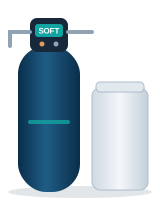
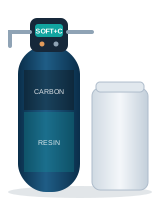
A softener works by ion exchange: resin beads trade hardness minerals for sodium or potassium, then rinse themselves clean during regeneration. It also handles small amounts of iron. What it doesn't do is remove arsenic, nitrate, chlorine or bacteria, which matters on a Placitas well. For arsenic or nitrate in drinking water, see reverse osmosis for Placitas homes.